I am a Postdoctoral Researcher in the Department of Economics and Business at Universitat Pompeu Fabra and a Research Affiliate at ESSEC Business School and TILEC (Tilburg University). I received my Ph.D. in Economics from Tilburg University in 2023.
My research is in empirical industrial organization, with a focus on market design and competition policy. In my work, I develop empirical models of strategic interaction and apply econometric tools for structural estimation and causal inference to detailed market data.
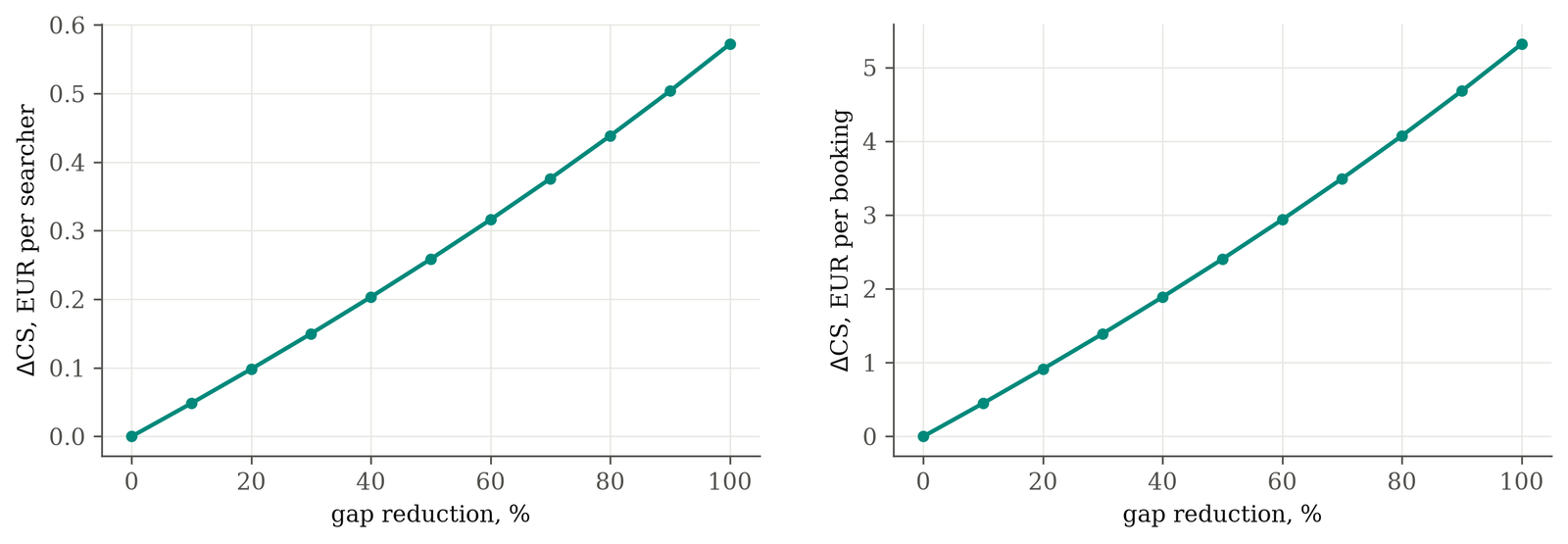
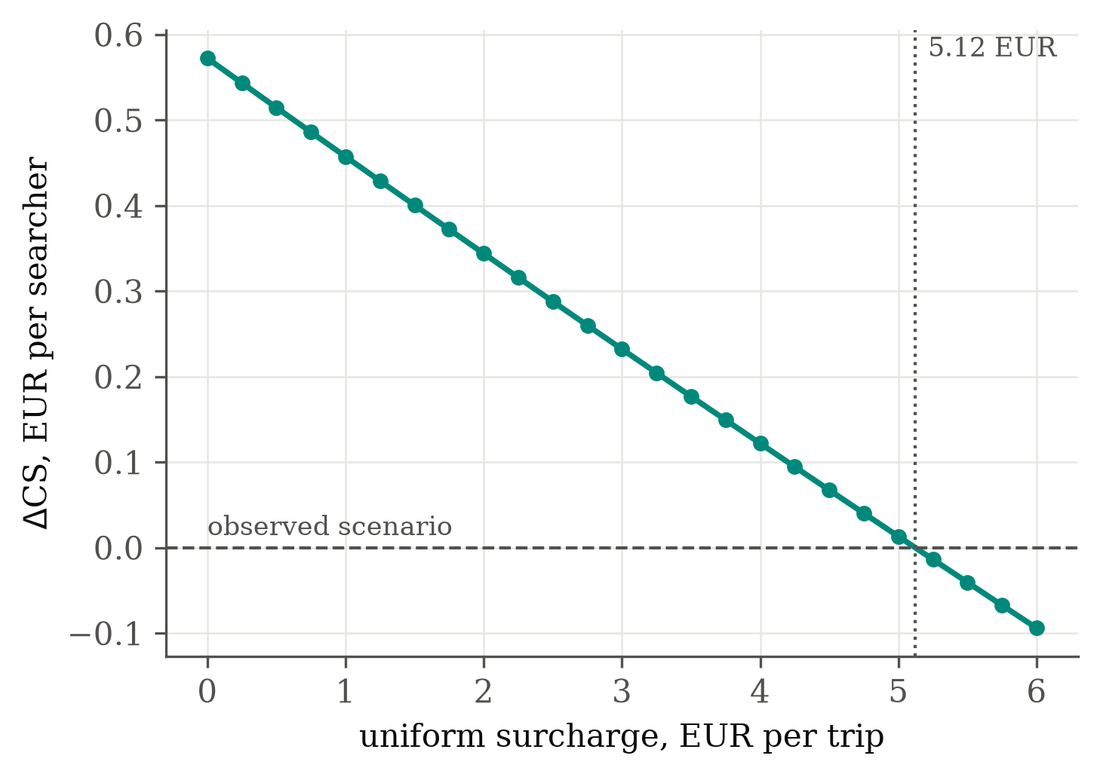
We recover the valuation for multimodal technologies, which allow consumers to combine different transport modes within a single trip, using detailed data from a long-distance transportation platform in France. About 34\% of the trips booked on the platform start or end in a different location from the one consumers initially searched for. We estimate a structural demand model and quantify the disutility arising from these spatial mismatches. We find that consumers are willing to pay 6.95 EUR, about a third of a fare, to eliminate the average distance gap, and older and privacy-sensitive consumers would pay more than younger ones. We use our estimates to study the gains from eliminating spatial mismatches through the multimodal technology. The technology would raise total consumer surplus by 10.4 EUR million: 0.57 EUR per searcher or 5.6 EUR per booking. We then show that the platform could charge a uniform fee of up to 5.12 EUR per trip, about a quarter of the average fare, for the technology without reducing the average surplus.
Key figures
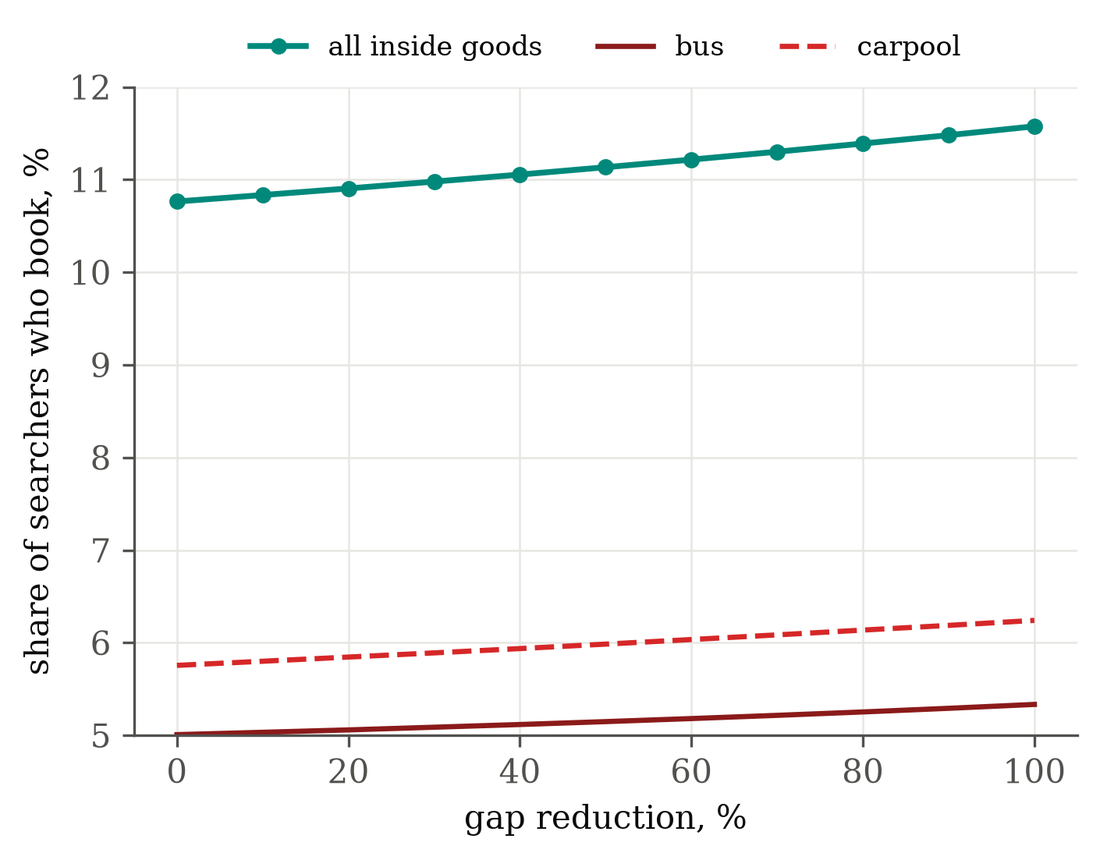
Change in consumer surplus as the gap between searched and booked locations is reduced, holding prices fixed (0% = observed data). Left: per searcher. Right: total change divided by the observed number of bookings.Extensive margin: share of searchers who book, overall and by mode (bus, carpool), as the gap is reduced.Change in consumer surplus per searcher when the gap is fully removed and every trip pays a uniform surcharge. Consumer surplus returns to its observed level at a surcharge of about EUR 5.12 per trip.
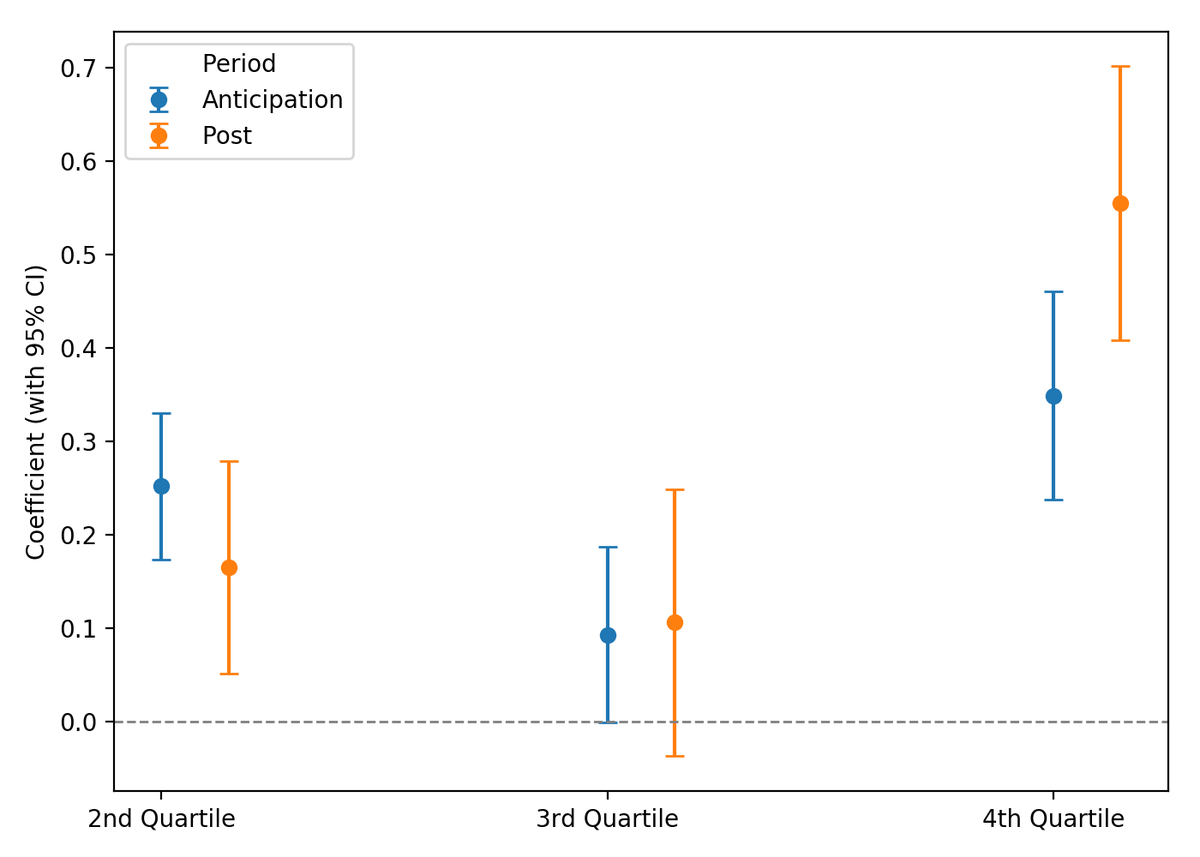
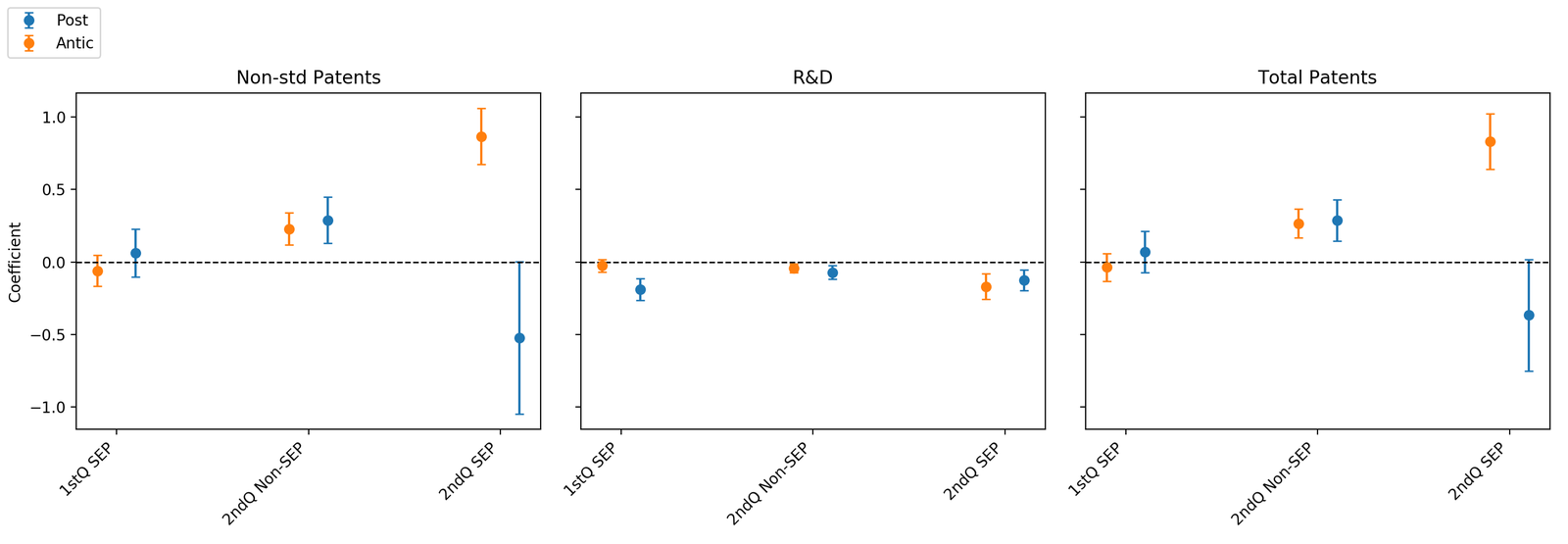
This paper investigates how stricter licensing rules affect firms' incentives to innovate in standard-related technologies. I study the 2015 patent policy revision by the Institute of Electrical and Electronics Engineers (IEEE), which limited SEP holders' ability to seek injunctions and encouraged royalties based on the smallest salable unit. Using a continuous difference-in-differences approach, I show that the new policy increases standard-related patenting, with the strongest effects among firms furthest from the standards' technology space. However, the effects differ across firm types. SEP holders reduced their innovation activity, consistent with weaker royalty incentives, while non-SEP firms expanded patenting, benefiting from lower licensing costs and new opportunities to reposition themselves. Although the policy created challenges for SEP owners, my results suggest that the broader increase in innovation among other firms outweighed these declines. These results highlight how patent policy design within standard setting organizations can reallocate innovation incentives across firms.
Key figures
Effect of the IEEE policy change on non-standard-related patents for firms in the 2nd, 3rd and 4th quartiles of technological distance from the standards, in the anticipation and post-policy periods. Vertical bars are 95% confidence intervals.Mechanism analysis: effect of the policy change on non-standard-related patents, R&D and total patents for SEP and non-SEP holders in the 1st and 2nd quartiles, in the anticipation and post-policy periods.
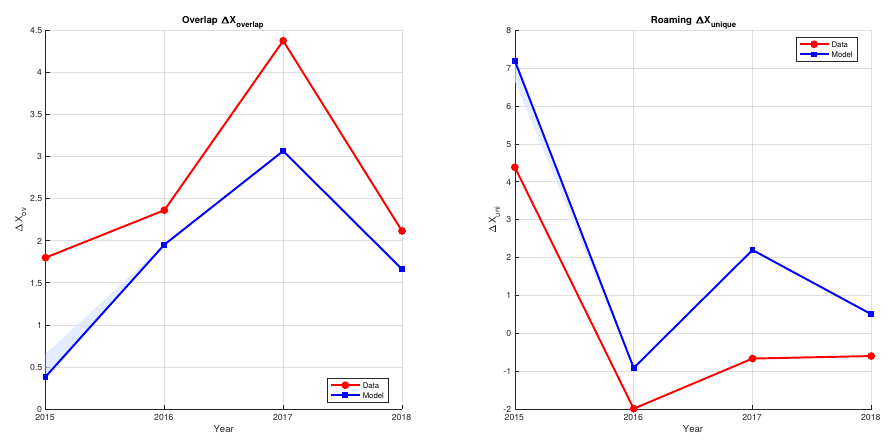
This paper studies how technological compatibility affects network investment and welfare in wireless markets. I develop an empirical model of consumer demand, spatial investment, and pricing using U.S. data from the 3G networks. Counterfactual experiments show that unifying the wireless network under a common standard increases welfare by expanding the effective network through roaming. However, compatibility shifts investment from previously unserved areas toward areas covered by compatible rivals, where firms internalize a larger share of returns. The welfare effects of compatibility depend not only on network size, but also on the spatial allocation of firms' investment responses.
Key figures
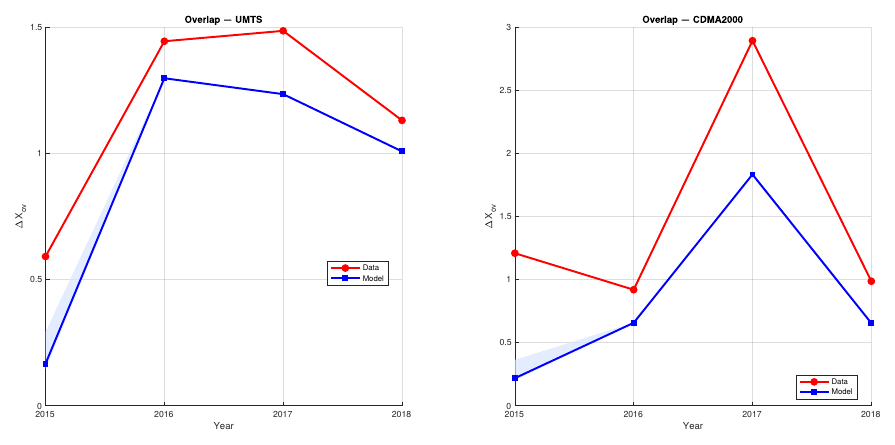
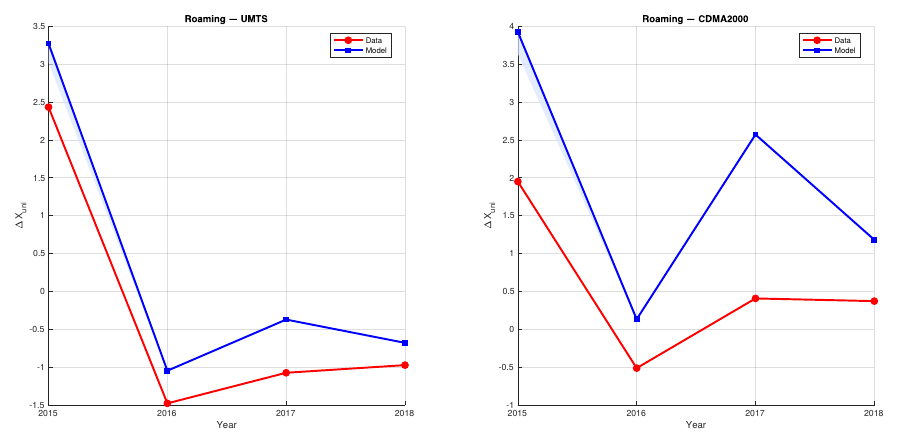
Model fit: per-year changes in overlapping and roaming coverage, data (red) vs. model (blue).Model fit: per-year overlapping coverage by standard (UMTS and CDMA2000), data vs. model.Model fit: per-year roaming coverage by standard (UMTS and CDMA2000), data vs. model.
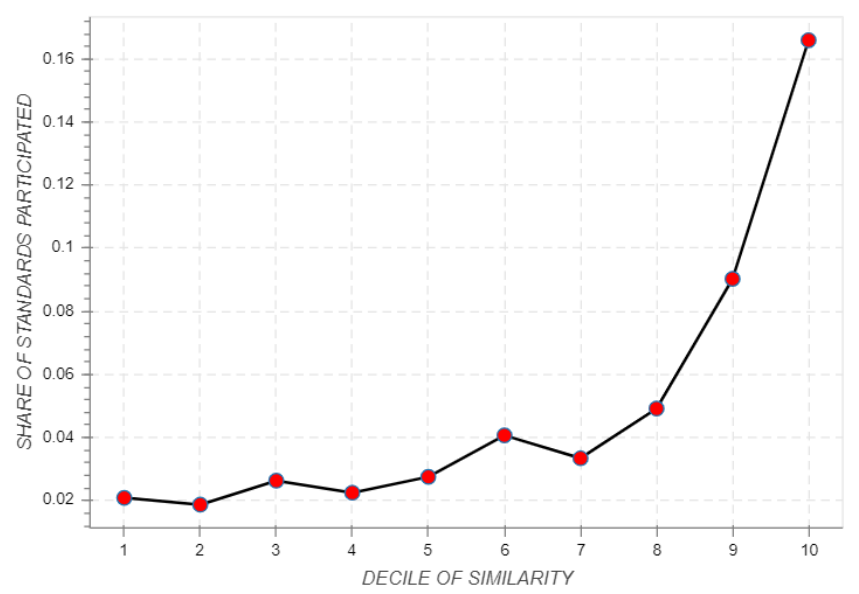
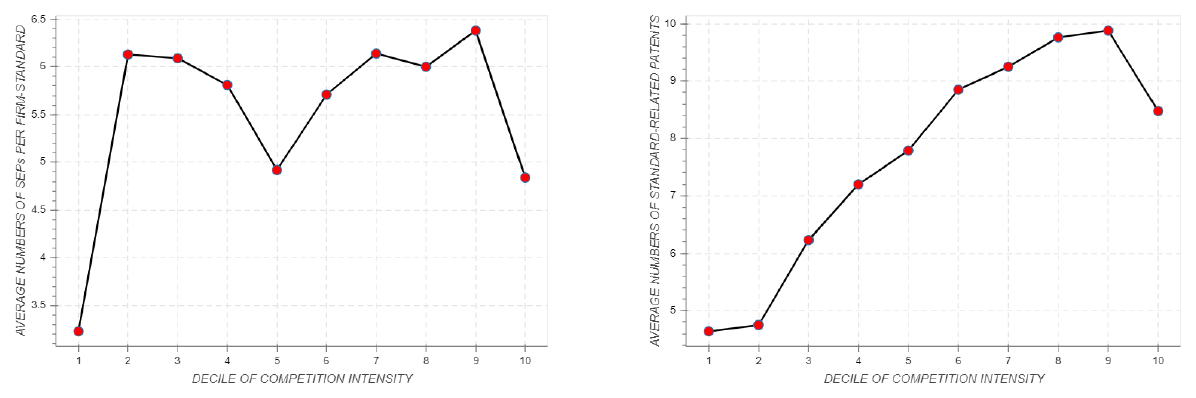
This paper studies the relationship between firms' decisions to participate in standardization and the fit between a firm's technical knowledge and the standard's position in the technology space. Focusing on a set of firms that declare essential patents for several standards issued by different organizations, I study how firms allocate their contributions across standards, depending on a firm–standard similarity measure and the intensity of competition among participating firms. My findings suggest that the match between the technological fields of a standard and the firm's technical knowledge is positively related to the firm's decision to participate in standards development. In particular, a 1 percentage point increase in the technological fit between a firm and a standard increases the probability that the firm participates in the standard's development by 0.05 percentage points. Furthermore, my results support the hypothesis of a competition effect among participating firms: a one-unit increase in the intensity of competition among firms in the same standard, driven either by more contributing firms or by greater knowledge similarity among them, decreases the number of SEPs declared by 32.7% on average.
Key figures
Average share of standards in which firms participate, by decile of firm–standard technological similarity.Average number of SEPs declared (left) and of standard-related patents filed (right) per firm–standard pair, by decile of competition intensity among contributing firms.
Work in Progress
Demand Estimation under Heterogeneous Dynamic Choice Sets and Forward-Looking Consumers, with J. Hidalgo
The Equilibrium Effects of Multimodal Technologies, with J. Hidalgo
Interoperability and Innovation: Evidence from the Digital Markets Act, with Laura Lasio
Information, Price Commitment, and Entry in Peer-to-Peer Markets, with J. Gambato and L. Madio
Other Writings
Bonani, M. (2016). “Una nuova forma di impresa: la start-up innovativa.” I&C, N. 8. Bruno Mondadori, Milan. (In Italian) [link]
Bonani, M., and Mezza, L. (2015). “La performance delle imprese attraverso i dati di bilancio.” In Milano Produttiva 2015, pp. 74–101. Bruno Mondadori, Milan. (In Italian) [link]
Teaching
2025–2026
Introduction to Game Theory (CRM), Barcelona School of Economics
2023
Business Economics (graduate), ESSEC Business School
2020
Data Communication for Policy Analysis (undergraduate, lecturer), Tilburg University
2017–2022
Teaching assistant at Tilburg University: Econometrics, Industrial Economics, Microeconomics
Contact
Department of Economics and Business, Universitat Pompeu Fabra Ramon Trias Fargas 25–27, 08005 Barcelona, Spain michela.bonani@upf.edu